Origin of Cream Ringnecks, Stubby Dwarf Ringnecks, Pink Ringnecks, Silky Breeding Data, Sex Linked Colors in Ringnecks
CREAM: THE FIRST IVORY - ROSY RINGNECK DOVES
by Wilmer J. Miller
ADAN Sep-Oct: 85: 6-7
ADAN Jan-Feb ‘90: 11-12
Putting mutants together in doves to see the interaction is not really easy even with adequate facilities. The first mating that I had that could produce a cream (ivory-rosy) was put together in April 1973 in the ISU laboratory. It produced 9 classified offspring (the 429 family). Three were dark, 4 blond, 1 rosy and 1 peach. Some additional matings also (by chance) failed to yield creams.
The first dove that might have been actually cream was 450R hatched 27 July 75. It was called "tan" in color which fits what we now know about cream. But at that time we didn’t know what it would actually be. Both parents were heterozygous (split) for ivory and rosy. They had 19 progeny. But 450R never reproduced and died at 1 ½ years of age.
The first dove that could have been peaches and cream was D223A, hatched 14 July 77. It looked albino with ruby eyes while juvenile. It was in a backcross species hybrid family and was later "diagnosed" as ivory - pied - rosy. But it did not reproduce.
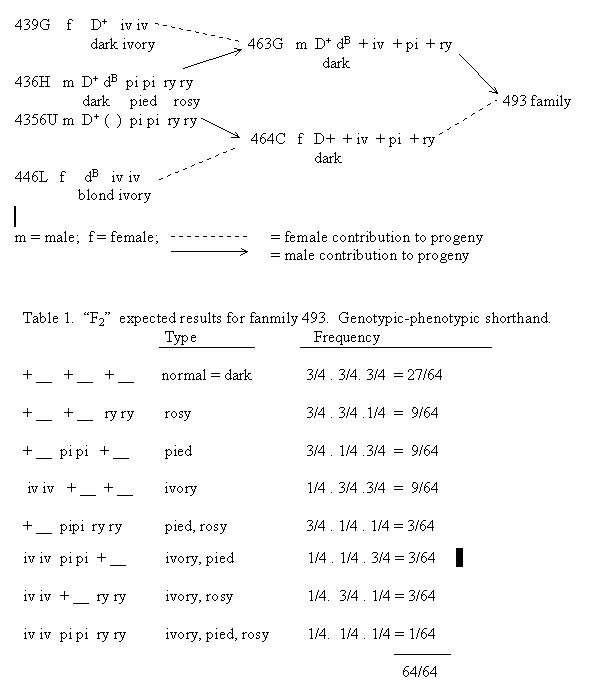
The first successful mating that "for sure" produced what we were after (new mutant combinations) was the large 493 family. It could produce cream as well as peaches and cream by pedigree (see figure 1 and table 1). On 14 July 78 (coincidence 493X hatched that was later diagnosed as a female blond-ivory-pied-rosy = light peaches and cream. On 20 Nov 78 a sibling 493E2 hatched and became an ivory-rosy = heavy cream; but it died at 4 months of age. By then other matings had produced viable creams and we really got going with them. It took more than 5 years after it was first posssible.
An indication of the family’s genetic make-up for color and expected segregations may be of interest, tables 1 and 2. Note that the least likely peaches and cream probability of occurrence of 1/64 occurred by chance before (14 July) the cream (20 Nov) with a probability of 3/64 = 1/16.
Just to fill out the picture of early results, in table 3 is presented the testcross results for producing creams. The parents were cream mated to doves heterozygous (split) for ivory and rosy.
Others could have combined the mutants before these dates, but I know of none who did. How about it - - were there ivory-rosy = cream doves available before 1979?
Figure 1. One method of combining some color mutants in ringneck doves.
Table 2. Actual "F2" results for trihybrid ivory, pied, and rosy. color distribution of offspring in family 493.
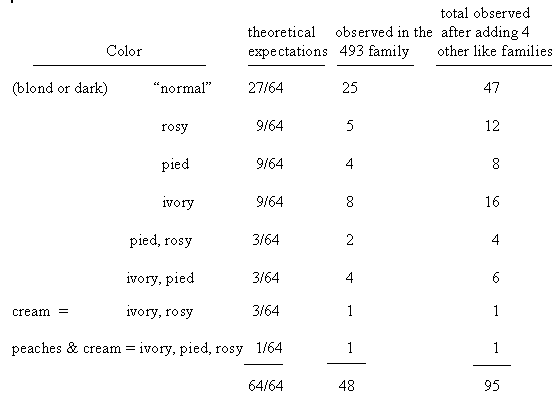
Table 3. Testcross results in 3 families for ivory-rosy segregation and assortment with equal frequencies expected.
Family number Normal  ivory   rosy  cream  total
     523       8        2       5     4     19
    J122       4        2       2     1      9
     578       3        2       0     2      7

              15        6       7     7     35
Origin of Cream Ringnecks, Stubby Dwarf Ringnecks, Pink Ringnecks, Silky Breeding Data, Sex Linked Colors in Ringnecks